

Copper pet bowls are more than everyday essentials. Their distinctive warmth, handcrafted character, and timeless appearance bring something special to your pet's daily routine.
Like all copper items, however, they can gradually change in appearance with regular use. You may notice your bowl becoming darker, losing its original shine, or developing patches of discoloration. This is a natural characteristic of copper known as patina.
The good news is that understanding how copper changes and following appropriate care practices can help you maintain its appearance over time.
In this guide, we will explain why copper develops patina, how to approach everyday cleaning, how to polish copper with the right product, and what to avoid when caring for your copper pet water bowl.
At Embers Elements, our copper bowls are designed for water only, while our brass bowls are intended for wet and dry pet food. This guide focuses specifically on the care and maintenance of copper bowls.
Table of Contents
- Why does copper develop patina?
- How to clean a copper pet bowl: Step-by-step guide
- How to polish a copper pet bowl with Perfect Polish
- How often should you clean and polish copper?
- What should you avoid when caring for copper?
- Does copper patina affect your bowl?
- Copper bowl care tips for everyday use
- Frequently asked questions
- Final thoughts
1. Why Does Copper Develop Patina?

Copper is a reactive metal. When exposed to oxygen, moisture, and environmental conditions, its surface can gradually change.
This process is commonly associated with oxidation and tarnishing. Over time, copper may develop a darker appearance, lose some of its original brightness, or display variations in color.
These changes are often referred to as patina.
What causes copper patina?
Several everyday factors can influence how quickly copper changes color.
- Air exposure: Copper reacts gradually with oxygen in the surrounding environment.
- Moisture: Repeated exposure to water and humidity can influence surface changes.
- Handling: Oils and residues from hands can contribute to uneven discoloration.
- Environmental conditions: Humidity, temperature, and the surrounding environment affect how copper ages.
- Surface finish: Different finishes and polishing methods can influence the appearance and development of tarnish.
Because these factors vary, two copper bowls may develop different appearances even when they receive similar care.
Is copper patina normal?
Yes. A gradual change in copper's color and shine is a natural characteristic of the material.
You may notice:
- A gradual loss of the original reflective shine.
- Darker brown areas across the surface.
- Uneven coloring or a more aged appearance.
Changes in brightness around areas that receive frequent handling or moisture exposure.
These changes do not automatically mean the bowl is damaged.
However, it is important to distinguish ordinary tarnishing from possible corrosion or surface deterioration. Unusual green or blue-green deposits, flaking, pitting, or unexplained surface changes should not simply be assumed to be harmless patina.
If you notice these signs, stop using the bowl for your pet's water until you have checked the manufacturer's guidance or contacted Embers Elements.
Remember: Patina describes a surface change. It does not establish whether a bowl is hygienic, free from harmful substances, or suitable for continued drinking-water use.
2. How to Clean a Copper Pet Bowl: Step-by-Step Guide

Regular attention can help you identify surface changes early and maintain your copper bowl's appearance.
When caring for copper, gentle handling is important. Aggressive scrubbing, abrasive materials, and unverified cleaning products can alter the finish or create uncertainty about whether the surface remains appropriate for its intended use.
Here is a practical approach to copper bowl care.
Step 1: Empty the bowl and inspect its condition
Before cleaning, empty the bowl and take a moment to examine its surface.
Look for ordinary changes such as dullness or gradual darkening. Also check for anything unusual, including:
- Flaking or peeling material.
- Pitting or visible surface damage.
- Unexpected green or blue-green deposits.
Changes that look different from ordinary gradual tarnishing.
If you notice signs of corrosion or deterioration, set the bowl aside until you have confirmed that it is suitable for continued use.
A quick inspection can help you distinguish a change in appearance from a possible surface issue that requires further attention.
Step 2: Use a soft cloth and water for gentle surface care

For light dust or surface marks, begin with a clean, soft cloth and water where appropriate for your bowl's finish and manufacturer's care directions.
Follow these general precautions:
- Use a clean, non-abrasive cloth.
- Dampen the cloth with water.
- Gently wipe the surface without applying excessive pressure.
- Avoid rough scouring pads, steel wool, and abrasive brushes.
- Dry the exterior promptly with a clean, soft cloth to limit prolonged moisture exposure.
This is a gentle surface-care approach, not a replacement for the cleaning instructions supplied for a particular bowl.
Important: Do not assume that a method suitable for the exterior is also suitable for the interior or water-contact surface. Use only cleaning methods approved for the intended surface.
For a bowl designed to hold drinking water, the manufacturer's guidance should determine which cleaning products and methods are appropriate.
Step 3: Address tarnish with an appropriate copper cleaner

If your copper bowl has become dull or tarnished, you may want to restore some of its original shine.
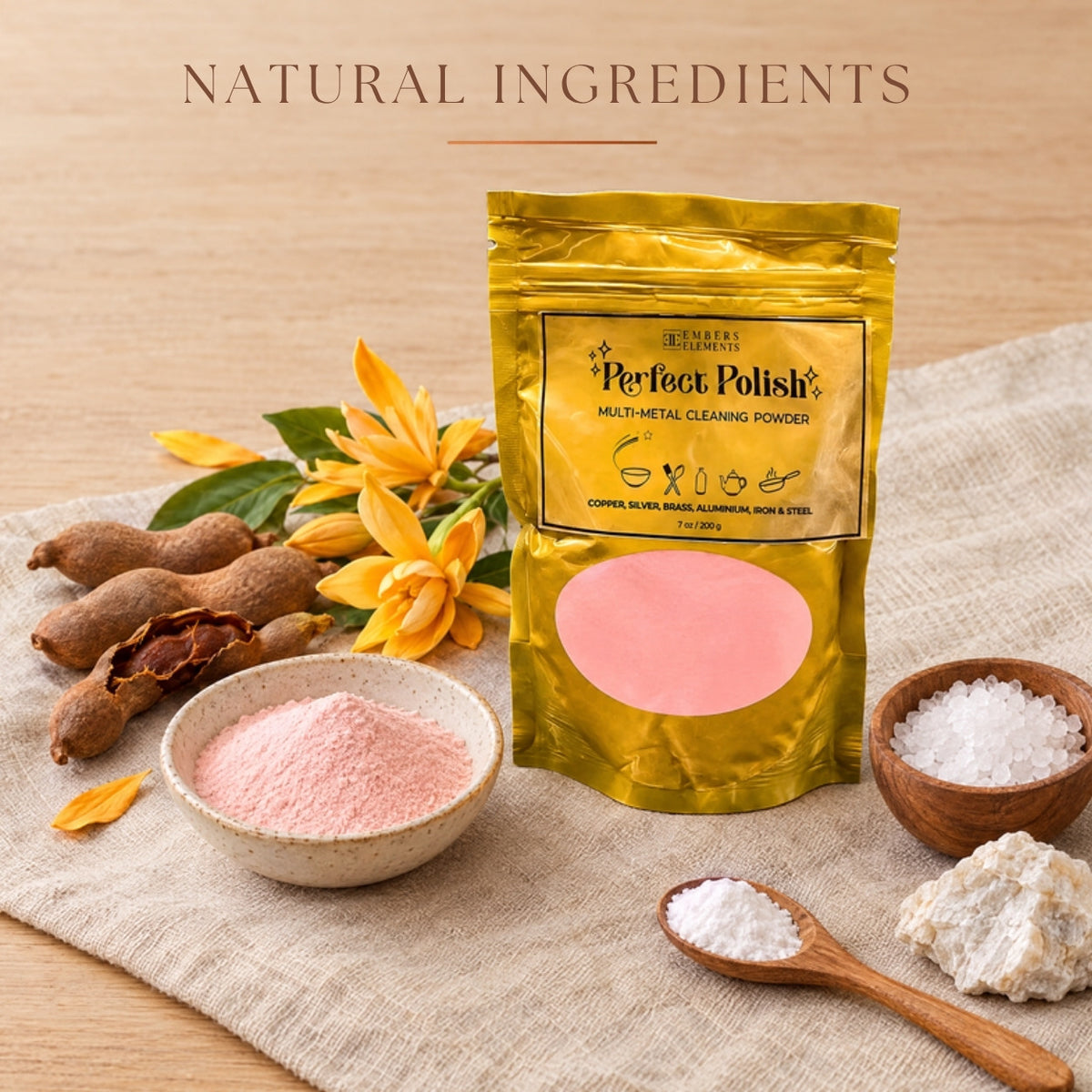
Embers Elements offers Perfect Polish Copper Bowl Cleaner, a multi-purpose metal cleaning powder positioned for copper and other metal surfaces.
Before using any polish, review the current product label and confirm that it is suitable for the specific surface and finish you intend to clean.
For a copper pet water bowl, keep the following in mind:
- Do not assume a metal polish is suitable for drinking-water contact.
- Do not apply cleaner to the interior or water-contact surface unless the product label and manufacturer explicitly authorize that use.
- Do not assume rinsing alone makes a polishing product suitable for a pet's drinking water.
- Avoid mixing cleaning products or combining a commercial polish with homemade acidic cleaners.
The product's suitability for a particular surface should be established from its current label and directions. Without that confirmation, it would not be appropriate to describe the cleaner as food-contact safe, pet-safe, or suitable for polishing the inside of a drinking-water bowl.
Discover Perfect Polish from Embers Elements
Perfect Polish Copper Bowl Cleaner $15.00
Individual product
A copper and multi-metal cleaning product from Embers Elements.
Perfect Polish 3-Pack Bundle

$30.00
Listed bundle offer
A three-pack bundle for those looking to purchase multiple packs.
Explore the complete range through our
3. How to Polish a Copper Pet Bowl with Perfect Polish

Polishing can help restore the appearance of tarnished copper, but the correct approach depends on the product, the finish, and the intended use of the item.
A polishing method used for decorative copper or other metal objects should not automatically be applied to a pet's drinking-water bowl.
Before polishing your copper bowl
Take these precautions before choosing a cleaning method:
- Inspect the bowl for damage, corrosion, or unusual deposits.
- Confirm the cleaner is suitable for the specific copper finish.
- Read the current product label and directions.
- Confirm whether the intended surface is approved for that application.
- Keep unverified polishing products away from the water-contact surface.
If the label does not clearly establish that the product is suitable for the intended surface, contact the manufacturer before using it.
What about the inside of the bowl?
This is particularly important for copper pet water bowls.
A cleaner may be designed to polish copper or multiple metal surfaces, but that does not automatically mean it is suitable for a surface that holds drinking water.
Unless the current product label and manufacturer explicitly confirm that application, do not apply the cleaner to the bowl's interior or water-contact surface.
Likewise, do not assume that rinsing the bowl after polishing makes it suitable for drinking-water contact.
The purpose of polishing should be to maintain the appearance of the metal without compromising the bowl's intended use.
Before-and-after: Copper bowl polishing
Suggested featured image caption: A comparison of tarnished copper and polished copper, illustrating the difference in surface appearance.
Copper's appearance can change considerably with time and surface care. A brighter finish may appeal to owners who prefer the original shine, while others appreciate the character of naturally aged copper.
Neither appearance alone establishes whether a bowl is suitable for drinking-water use.
4. How Often Should You Clean and Polish Copper?
One of the most common questions about copper care is how frequently a bowl should be cleaned or polished.
The answer depends on how the bowl is used, the surrounding environment, its surface finish, and the manufacturer's care instructions.
There is no universal polishing schedule that applies to every copper bowl.
Everyday care versus polishing
|
Care activity |
Suggested approach |
|---|---|
|
Inspect the bowl |
Regularly, before use |
|
Address visible dirt or residue |
As needed, using an approved cleaning method |
|
Dry after moisture exposure |
Promptly, where appropriate |
|
Polish to restore shine |
Only when needed and when the product directions permit it |
Should you polish copper every week?
Not necessarily.
Frequent polishing is not automatically better. Polishing products can affect the surface finish, and their suitability depends on the specific product and application.
If your bowl has simply become darker or less reflective, that change alone does not mean it needs a chemical cleaner.
A sensible approach is to monitor the bowl's condition, follow its product-specific cleaning guidance, and avoid unnecessary polishing.
Our recommendation: Prioritize appropriate cleaning and surface condition over maintaining a permanently shiny appearance.
5. What Should You Avoid When Caring for Copper?
Copper is valued for its appearance and material characteristics, but it requires thoughtful handling.
Some common household cleaning methods may be suitable for decorative metal objects but are not necessarily appropriate for a pet's drinking-water bowl.
Here are the main things to avoid.
Avoid acidic foods and acidic cleaning mixtures
Copper bowls from Embers Elements are designed for water only, not for serving food.
Do not use your copper water bowl for acidic foods such as citrus-based foods, acidic sauces, or other acidic food preparations.
Acidic substances can react with copper and may increase copper release under certain conditions.
For the same reason, avoid using vinegar, lemon juice, or other acidic household mixtures on the water-contact surface unless the manufacturer explicitly approves the method for your particular product.
Although vinegar and lemon juice are frequently promoted online as natural copper cleaners, a method that restores shine to decorative copper is not automatically appropriate for a pet's drinking-water bowl.
Avoid abrasive cleaning materials

Rough scouring pads, steel wool, and aggressive scrubbing can scratch copper or change its finish.
For gentle surface care, use only materials and methods appropriate for the bowl's construction and manufacturer-approved directions.
Avoid attempting to remove tarnish by aggressively scraping or sanding the metal.
Avoid unverified cleaning products
Not every copper cleaner or metal polish is designed for items that come into contact with drinking water.
Before using a product, confirm:
- Whether it is suitable for the particular copper finish.
- Whether its directions authorize the intended surface application.
- Whether the label addresses water-contact use and any necessary precautions.
Do not assume a cleaner is safe for a pet simply because it is marketed as natural, multi-purpose, or suitable for metal.
If the product's directions do not clearly establish its suitability, do not use it on the bowl's interior.
Avoid treating patina as proof of safety
Copper's antimicrobial properties have been studied under specific conditions, but the presence of copper or patina does not establish that a finished pet bowl disinfects water or prevents infection.
A copper bowl should not be treated as a substitute for appropriate cleaning, veterinary advice, or responsible pet care.
6. Does Copper Patina Affect Your Bowl?
Yes, patina changes the appearance of copper.
As copper ages, it may become darker, less reflective, or develop an uneven finish. Some owners prefer the bright look of polished copper, while others appreciate the warmer appearance of naturally aged metal.
Both preferences are understandable.
Is patina a sign that the bowl is damaged?
Not necessarily.
A gradual change in color or shine is a natural characteristic of copper. However, unusual deposits, flaking, pitting, or other signs of surface deterioration should be evaluated separately.
If you are unsure whether a surface change is ordinary tarnishing or possible corrosion, stop using the bowl for water until you have received product-specific guidance.
Does polishing remove patina?
Polishing may remove some surface tarnish and restore brightness, depending on the product and the copper finish.
However, not every change in copper's appearance can or should be removed through polishing.
The correct approach depends on the bowl's construction, finish, and intended use. Avoid aggressive polishing or chemical treatments that have not been approved for your particular product.
The key takeaway: A polished finish is an aesthetic preference, not a measure of hygiene or proof of suitability for drinking-water contact.
7. Copper Bowl Care Tips for Everyday Use
A few simple habits can help you approach copper bowl care more thoughtfully.
Tip 1: Know the intended use of your bowl
Embers Elements copper bowls are designed for water only.
Our brass bowls are intended for wet and dry pet food.
Using each product according to its intended purpose is an important part of responsible product care.
Tip 2: Check the surface regularly
Take a moment to inspect the bowl for unusual discoloration, damage, or deposits.
Gradual darkening may be ordinary tarnishing, but unexpected surface changes should be investigated.
Tip 3: Avoid unnecessary polishing
A copper bowl does not need to maintain a mirror-like shine to retain its distinctive appearance.
Avoid unnecessary use of chemical cleaners, particularly when their suitability for the intended surface has not been established.
Tip 4: Follow product-specific cleaning directions
Different copper finishes and cleaning products may require different care methods.
Use the instructions supplied for your particular product rather than assuming that all copper bowls or metal cleaners can be treated the same way.
Tip 5: Keep copper and brass care distinct
Although copper and brass are both valued for their appearance and craftsmanship, they are different materials and may have different product-specific care requirements.
Always check the directions for the specific item and cleaner you are using.
For further product information, visit the Embers Elements
8. Frequently Asked Questions
1. How do you clean a copper pet bowl?
Begin by checking the manufacturer's care guidance. For gentle surface care, use a soft cloth and water where appropriate, avoid abrasive materials, and dry the exterior promptly.
Use a copper polish only if the product directions explicitly permit its use on the particular surface.
For copper bowls intended to hold drinking water, do not assume that a general metal cleaner is suitable for the interior or water-contact surface.
2. How do you polish a copper pet bowl?
First, confirm that polishing is appropriate for the bowl's finish and intended use.
Use only a product whose directions authorize the intended application. Do not assume that a general copper polish is suitable for the inside of a pet water bowl or that rinsing makes it safe for drinking-water contact.
Embers Elements offers Perfect Polish Copper Bowl Cleaner and a three-pack bundle. Review the current product directions before using either product on a particular surface.
3. Does copper naturally develop patina?
Yes. Copper reacts with oxygen and moisture, which can gradually change its color and finish.
This natural process may produce darker areas, uneven coloring, and a less reflective surface.
Unusual deposits, pitting, or flaking should be evaluated separately rather than automatically treated as normal patina.
4. How often should I polish my copper bowl?
There is no fixed schedule that applies to every copper bowl.
Polishing frequency depends on the bowl's finish, environment, condition, and manufacturer-approved care method.
A bowl does not necessarily need polishing simply because it has become less shiny.
5. Can I use vinegar or lemon juice to remove copper tarnish?
Do not use vinegar, lemon juice, or other acidic cleaners on the water-contact surface unless the manufacturer explicitly approves the method.
Copper can react with acidic substances, and a household cleaning method may not be appropriate for a pet's drinking-water bowl.
6. Can I use Perfect Polish on my copper pet bowl?
Embers Elements offers Perfect Polish Copper Bowl Cleaner, a multi-purpose metal cleaning powder.
However, suitability for a particular bowl surface or drinking-water contact should be confirmed against the current product label and manufacturer directions.
Do not assume that the product is suitable for the bowl's interior or that it is safe for water contact simply because it is designed for metal cleaning.
You can explore the product here:
7. Can I use a copper pet bowl for food?
Embers Elements copper bowls are designed for water only, not for serving wet or dry pet food.
Our brass bowls are intended for wet and dry pet food. Always follow the intended use and care directions for the particular product.
8. Does copper patina mean my pet's bowl is unsafe?
Not automatically. A gradual change in copper's appearance can be a natural characteristic of the metal.
However, appearance alone cannot establish whether a bowl is safe or suitable for continued drinking-water use.
If you notice unusual deposits, flaking, pitting, or unexplained surface deterioration, stop using the bowl for water and seek product-specific guidance.
9. Final Thoughts
Copper pet bowls offer a distinctive combination of traditional craftsmanship, material character, and everyday functionality.
Their appearance naturally evolves with use, and a gradual change in color is one of the characteristics of copper. Understanding patina, avoiding unsuitable cleaning methods, and following product-specific care directions can help you make informed decisions about maintaining your bowl.
At Embers Elements, we believe thoughtful material selection and artisanal craftsmanship can bring beauty and purpose to everyday pet essentials.
Our copper bowls are designed for water only, while our brass bowls are intended for wet and dry pet food. We encourage owners to follow the intended use of each product and choose cleaning methods appropriate for its materials and finish.
Explore our handcrafted copper and brass pet bowls and discover a collection inspired by quality, design, and our philosophy:


